
Homes, shops and businesses
Good lighting is mostly decisions made before anything is installed: where the light lands, how it’s switched, and whether the controls and the fixtures actually work together. Sasquatch Electrical designs and installs lighting for homes, shops and commercial buildings across Ellensburg, Kittitas County and Central Washington — new layouts, LED retrofits, controls, and exterior and parking lot lighting.
What We Install
Residential, shop and commercial
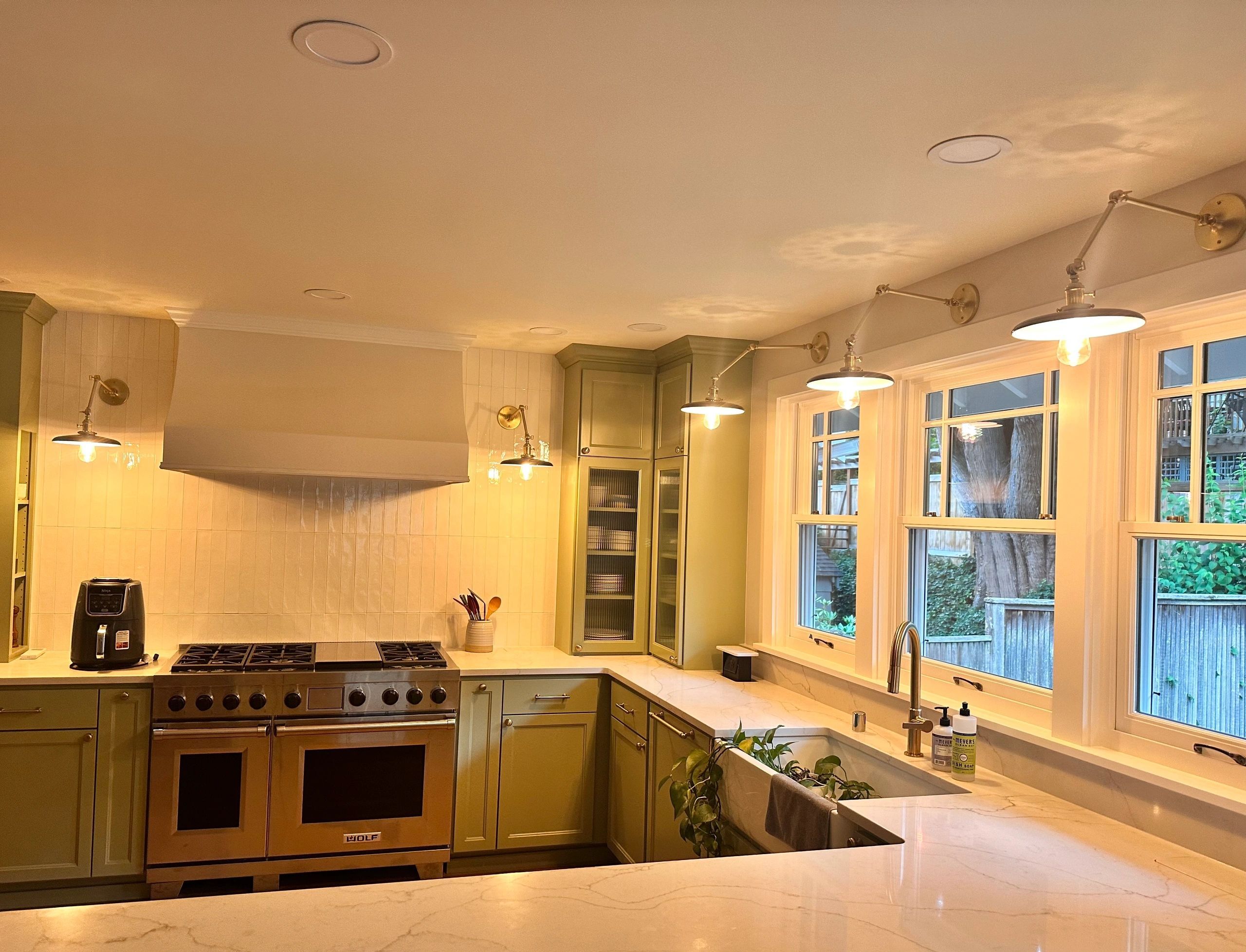
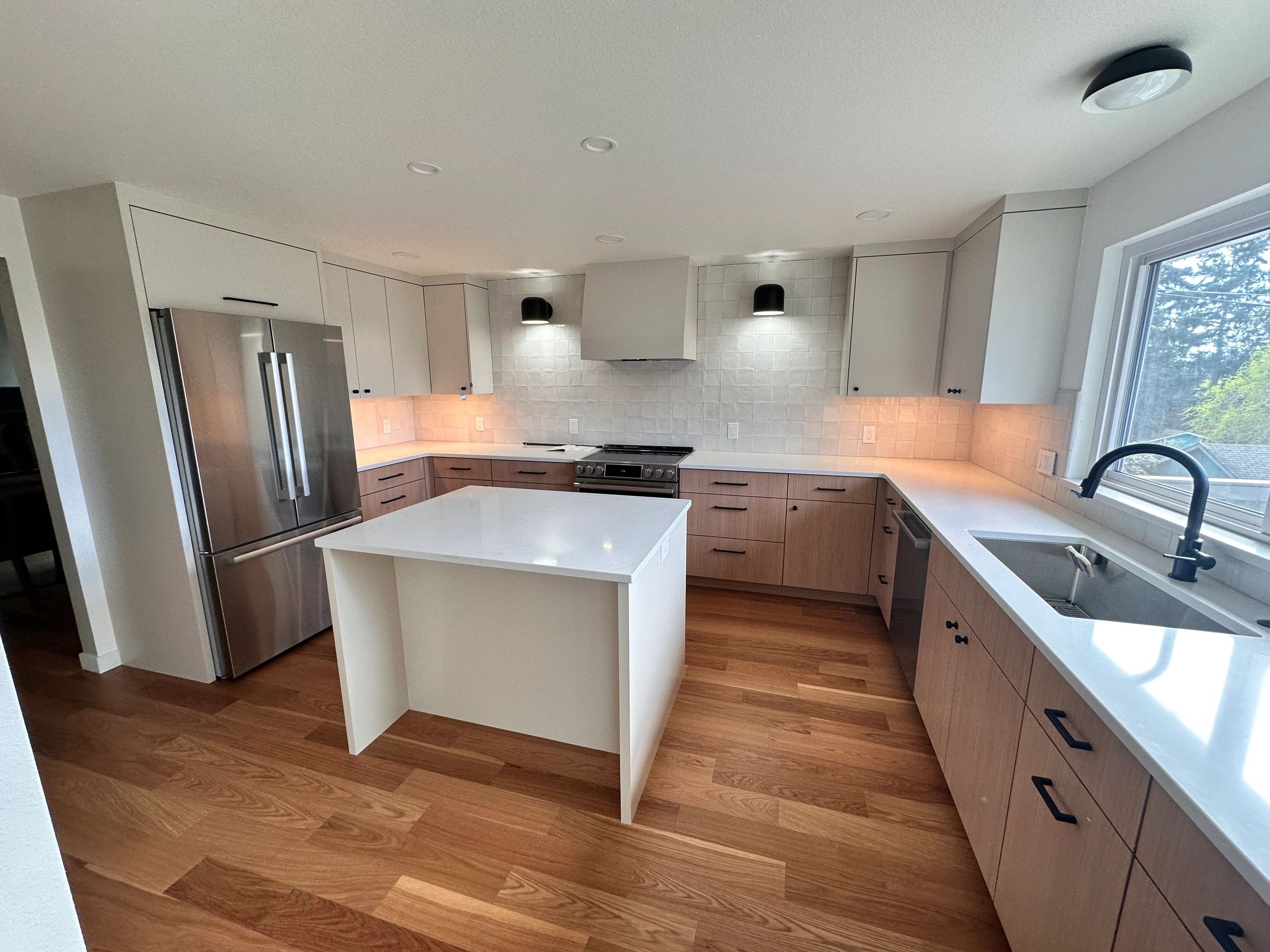
- Recessed and kitchen lighting. New can layouts, under-cabinet lighting, and replacing a single ceiling fixture with light that actually reaches the counters.
- Shop, garage and barn lighting. High-output LED for spaces where you need to see what you’re working on, switched in zones so you aren’t lighting the whole building to find one tool.
- Dimmers, controls and smart switching. Dimmers matched to the fixtures, occupancy and vacancy sensors, timers, and app-controlled switching where it earns its keep.
- Exterior and security lighting. Entry, driveway, yard and outbuilding lighting on photocells, timers or motion sensors, in fixtures rated for the weather they’ll sit in.
- Commercial lighting. New installations, LED retrofits, lighting controls, and exterior and parking lot lighting for retail, office, industrial and public facilities.
LED Retrofits: Three Ways to Do It
And which one is worth paying for
Swapping fluorescent tubes for LED sounds like one job. It’s really three different ones, and the cheapest isn’t always the cheapest for long.
Plug-in LED tubes drop into the existing fixture and run off the old fluorescent ballast. Lowest cost up front — but the ballast is still in the circuit, still drawing power, and still the part most likely to fail next.
Ballast-bypass tubes are wired straight to line voltage with the ballast removed. More labor per fixture, nothing left to fail but the tube, and the fixture has to be rewired and labeled correctly so the next person doesn’t put a fluorescent tube back in it.
New LED fixtures replace the whole thing. That’s the right call when the old fixtures are yellowed, damaged, or in the wrong place to begin with, and it’s usually the only route that gets you proper dimming and controls.
For an unheated shop or barn there’s a local reason to make the switch: fluorescent tubes are slow and dim in the cold, and LEDs are not. A shop that takes ten minutes to come up to full light in January will be at full output the moment you hit the switch.
Why New LEDs Flicker, Buzz or Won’t Dim
It’s usually the dimmer
The most common lighting complaint we’re called out for isn’t a bad fixture — it’s an older dimmer built for incandescent loads trying to control a few watts of LED. The result is flicker, buzzing, lights that glow when “off,” or a dimming range that jumps from bright to dark with nothing in between. The fix is a dimmer rated for LED and matched to the fixtures on it, not a different brand of bulb.
Flicker across the whole house is a different problem. If lights dim when the well pump or furnace starts, or brighten and dim together, that can point to a failing connection or service neutral — see electrical repair and troubleshooting. That one shouldn’t wait.
Getting Recessed Lighting Right
Insulation, air sealing and color
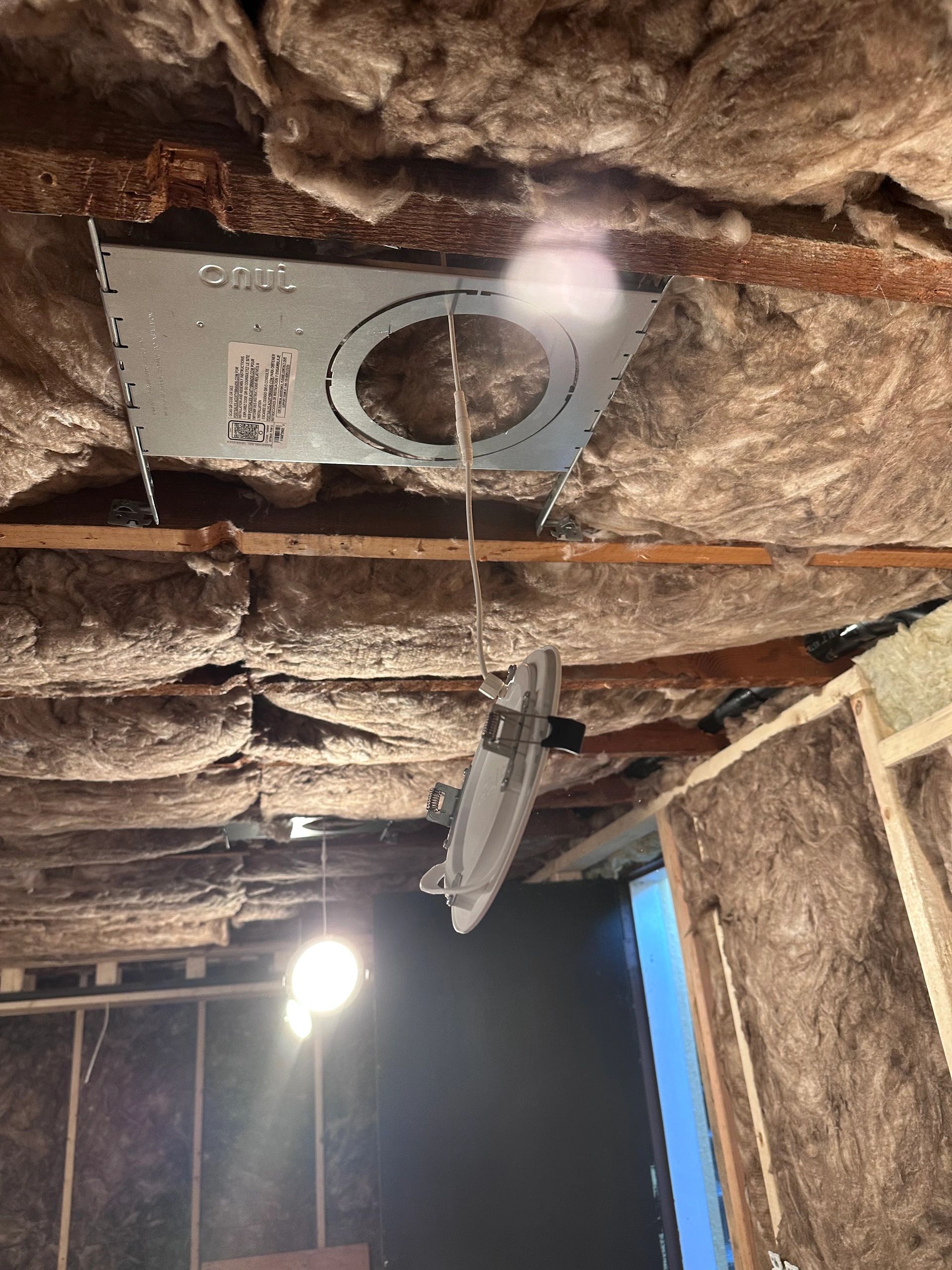
Recessed lights in an insulated ceiling have to be rated for insulation contact and sealed against air leakage — otherwise every can is a hole in the ceiling that leaks heat into the attic all winter. Low-profile LED fixtures make that much easier than the old housings did, and they fit where a joist used to rule a location out.
Color matters as much as brightness. Warm white, around 2700K to 3000K, suits living spaces. Cooler light, 4000K to 5000K, suits shops, garages and work areas. Mixing them in one room is the fastest way to make new lighting look wrong, so we settle it before anything is ordered.
Commercial Lighting and Controls
For a business, lighting is an operating cost and often a safety issue. We handle interior retrofits, exterior and parking lot lighting, and the controls — occupancy sensors, photocells, scheduling — that keep lights from burning in empty rooms. Some utilities offer incentives for commercial lighting upgrades; whether any apply depends on which utility serves your building, and we’ll check before you budget around it. Larger projects and public facilities are covered on our commercial electrical page.
Frequently Asked Questions
Do I need a permit to add lighting? New lighting circuits and added fixtures are electrical work, and electrical work in Washington requires a permit and inspection. We pull the permit and schedule the inspection as part of the job.
Can you add recessed lights to an existing ceiling? Usually, yes. Access from an attic makes it simple; a finished ceiling with a floor above takes more planning to fish the wiring. We’ll tell you what’s realistic for each room before we quote.
Will my existing dimmers work with LED fixtures? Sometimes. Older dimmers designed for incandescent loads often cause flicker or buzzing with LED. We check compatibility and replace the dimmer where it’s needed.
Can you light a detached shop or barn? Yes. We look at the feeder to the building first — if the existing run is undersized or old, that gets sorted before lighting goes on it. See panel and service upgrades.
Do you install lighting I’ve already bought? Yes, as long as it’s listed equipment and suited to the location. If you’d like a recommendation instead, we’ll give you one.
Service area line: We also serve Kittitas, Cle Elum, Roslyn, Thorp, Easton, Ronald, Snoqualmie Pass, Yakima and Selah.
Recent Lighting projects
Related electrical services
Also serving Central Washington
Ellensburg, Cle Elum, Roslyn & Ronald, Snoqualmie Pass & Easton, Yakima & Selah, Wenatchee Valley, Moses Lake & Grant County
Last reviewed: October 6, 2026
